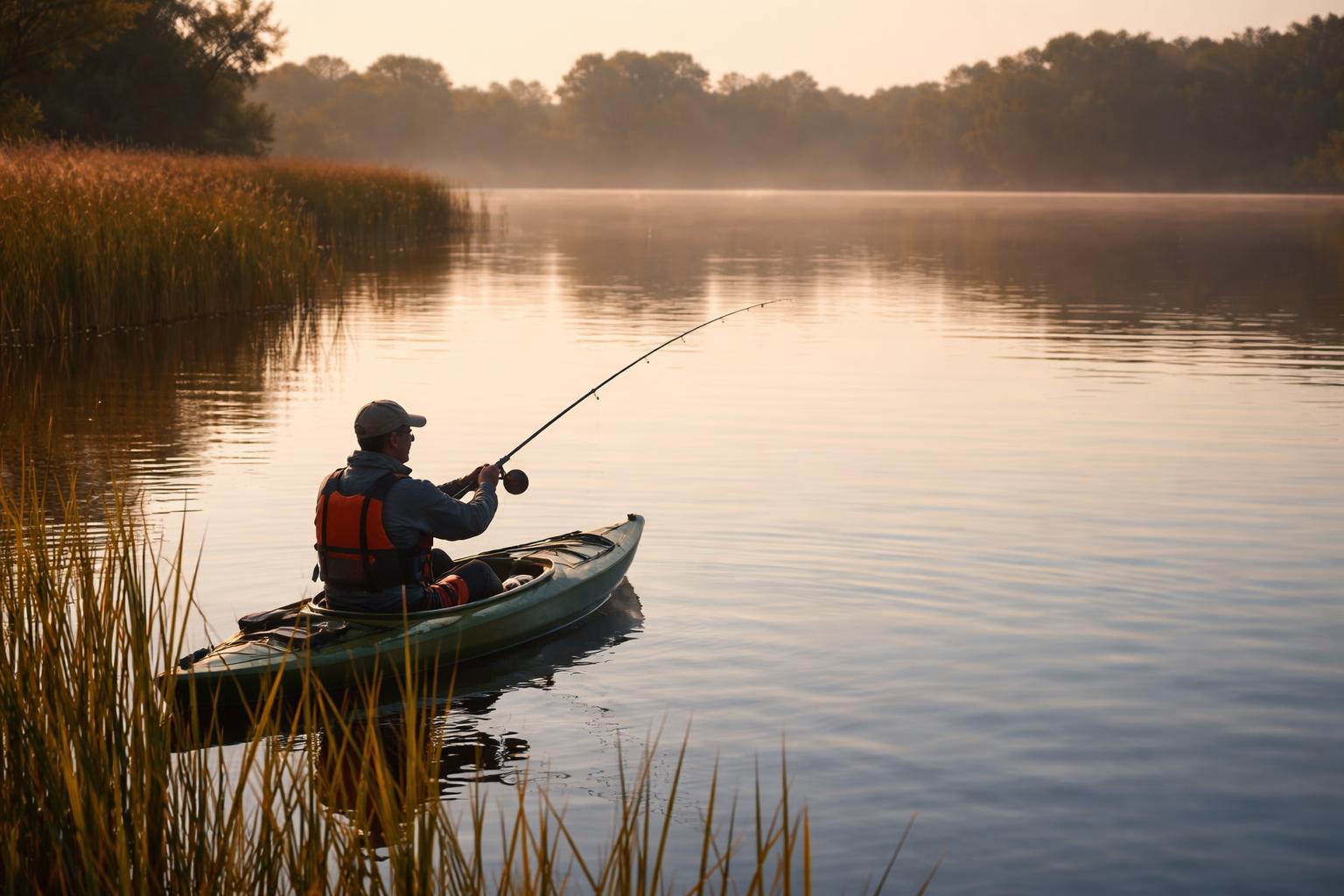
There’s nothing quite like the stealth and intimacy of pursuing bass fishing from a kayak. I’ve spent countless hours navigating everything from skinny backwaters thick with vegetation to expansive, windswept lakes, and I can tell you that kayak bass fishing offers a perspective a traditional bass boat simply can’t match. That feeling of a powerful largemouth bass peeling line just feet from your paddle is exhilarating, and over the years I’ve refined my approach to consistently catch more bass, even on heavily pressured water. Let me walk you through everything I’ve learned the gear, the technique, and the mistakes that cost me fish before I knew better.
Quick answer: To catch more bass from a kayak, focus on three things: get within stealthy casting range using quiet positioning (anchor or pedal-drive), match your lure to the cover and water clarity in front of you, and cover water efficiently with a search bait until you find active fish then slow down and work that area thoroughly.
At a Glance
- Best time to fish: Early morning and late evening (“prime time”), plus overcast midday windows
- Best starter setup: One medium-heavy rod and reel, 10–15 lb line
- Top 3 beginner lures: Spinnerbait, Texas-rigged soft plastic, topwater frog
- #1 safety rule: Wear your PFD at all times, no exceptions
- Biggest kayak advantage: Stealth you can get closer to bass than any bass boat
Getting Started with Kayak Bass Fishing
Embarking on your kayak bass fishing journey doesn’t have to be daunting. If you’re still deciding whether a fishing kayak is right for you, or you’re completely new to the sport, our guide to kayaks for beginners is a good starting point. From there, the key is building a solid foundation dialing in your equipment and safety protocols before you make your first cast. Getting these basics right will significantly increase your comfort on the water and your chances of finding and catching big bass.
Choosing the Right Kayak for Bass Fishing
Selecting the ideal fishing kayak is paramount for a successful kayak bass fishing experience. While any kayak can get you on the water, modern fishing kayaks are purpose-built with features bass anglers actually need ample storage, stable platforms for standing, and integrated rigging tracks for accessories. I’ve personally owned several, and stability is almost always the deciding factor, especially when you need to stand for a precise cast or fight a feisty largemouth.
Consider the type of water you’ll fish most a wide, stable sit-on-top kayak suits big lakes, while a shorter, more maneuverable kayak often wins in tight, brushy creeks. If you’re weighing your first purchase, our guides on how to choose your first kayak, what size kayak you need, and kayak weight capacity walk through the tradeoffs in more depth. Anglers who want hands-free positioning should also look at our roundup of the best pedal kayaks for fishing.
Essential Gear Setup for the Kayak Angler
Once you have your fishing kayak, outfitting it correctly is the next critical step. Beyond a rod and reel, think about accessories that improve efficiency and comfort. Secure rod holders are a must they prevent your rods from going overboard during a tip or a hard hookset.
An anchor system, whether a traditional anchor or a shallow-water stake-out pole, lets you hold position against wind or current so you can properly work a shoreline or a dense patch of vegetation instead of constantly paddling to stay in place. For a full walkthrough of setting up rod holders, tracks, and accessories, see our guide to kayak fishing rigging, and a kayak fishing crate is one of the simplest upgrades for keeping tackle organized and within reach.
Safety Tips for Fishing from a Kayak
Safety should always be the top priority. As an experienced bass angler, I can’t stress this enough: wear a personal flotation device (PFD) at all times, regardless of swimming ability or how calm the water looks. Check the weather before you launch a sudden storm or strong wind can turn a pleasant outing into a dangerous one fast. Always share your float plan with someone: your launch and retrieve points and your expected return time, so someone knows where you are if something goes wrong.
One more thing beginners often overlook: check your local regulations before you launch. Rules on fishing licenses, daily bass limits, slot sizes, and seasonal closures vary by state and even by specific lake or river, and many states also require a kayak/vessel registration or a wearable PFD by law, not just by recommendation. A quick check of your state wildlife or fish-and-game website before every trip takes a few minutes and keeps you legal and the fishery healthy.
Essential Gear Checklist
Before you launch, run through this list. I keep a version of this taped inside my kayak’s dry hatch.
- [ ] PFD (life jacket) worn, not just stored on board
- [ ] Fishing kayak with rod holders and rigging track
- [ ] Paddle or pedal drive plus a spare paddle leash
- [ ] Anchor or stake-out pole for holding position
- [ ] Primary rod/reel (power fishing jigs, crankbaits, heavier cover)
- [ ] Secondary rod/reel (finesse soft plastics, light line)
- [ ] Tackle box stocked with spinnerbaits, soft plastics, crankbaits, topwater lures
- [ ] Pliers/hook remover and line clippers
- [ ] Dry bag for phone, keys, and a first-aid kit
- [ ] Sun protection hat, polarized sunglasses, sunscreen
- [ ] Whistle or signaling device for emergencies
- [ ] Float plan shared with someone on shore
- [ ] Fish finder/sonar (optional but valuable for open water)
- [ ] Weather check completed before launch
How to Catch Bass From a Kayak: Step-by-Step
If you’re brand new to this, here’s the exact process I follow on a typical outing.
1. Check conditions and pick your window. Look at wind, cloud cover, and water temperature before you launch. Calm, overcast mornings are usually your highest-percentage window; if wind is unavoidable, plan to fish the downwind bank where bait gets pushed.
2. Launch quietly and idle into the area. Bass in kayak-accessible water are often less pressured, but they still spook from noise and shadows. Paddle slowly as you approach your first spot save the aggressive paddling for transit between areas, not your final approach.
3. Start with a search bait. Tie on a spinnerbait or shallow-diving crankbait and fan-cast the area to cover water quickly. You’re not trying to catch every fish yet you’re trying to find where the active ones are.
4. Read the response and adjust. A follow, a blowup, or a missed strike tells you fish are present even without a hookup. That’s your cue to slow down.
5. Switch to a precision presentation. Once you’ve located fish, drop to a Texas-rigged soft plastic, jig, or finesse worm and work the specific cover a laydown, a dock post, a vegetation edge methodically instead of covering ground.
6. Position, don’t just cast. Use your anchor or pedal drive to hold a stable angle on the cover so you can make repeated, accurate casts instead of drifting off target after one throw.
7. Set the hook and fight smart. From a seated position, set the hook with a firm sideways sweep rather than a big overhead swing it’s more stable and less likely to tip you.
8. Land and release with care. Bring the fish alongside the kayak, lip or belly-grip it, and keep it in the water as much as possible if you’re practicing catch-and-release. Revive before letting go if it’s been a long fight.
Kayak Positioning Techniques
Positioning is the single most underrated skill in kayak bass fishing it’s the difference between three casts at a target and thirty.
- Anchor upwind or up-current of your target so the kayak drifts naturally toward the cover, not away from it, giving you a longer working window.
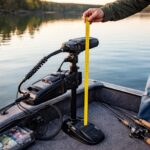
- Use a stake-out pole in shallow water (under 6–8 feet) for near-silent, instant positioning without the splash and delay of a traditional anchor. If you’re not sure how to rig or drop one properly, our guide on how to anchor a kayak covers it step by step.
- Angle for a parallel cast along a weed edge or dock line rather than casting perpendicular into it you’ll cover more of the strike zone per cast.
- Let the wind do the work on open flats: drift naturally along a break line while fan-casting instead of fighting to hold a fixed spot.
- Pedal-drive kayaks free your hands for constant micro-adjustments, which is a real advantage when you’re picking apart isolated cover like a single stump or dock piling. If you fish larger water and want motorized assist, check out our picks for the best kayak trolling motors and tips on choosing the right trolling motor.
- Approach from the deep side when possible bass facing shallow cover are less likely to notice you sneaking up from behind them.
How Close Should You Get to Bass?
Closer than you’d think, but not carelessly close. In clear, shallow water, stay back 20–30 feet and rely on a longer cast rather than paddling right up to the target bass in gin-clear water spook easily from shadows and pressure waves. In stained or murky water, you can comfortably close that gap to 10–15 feet since visibility works in your favor. The general rule: the clearer the water, the more distance you should keep and the more your casting accuracy needs to make up for it.
Common Kayak Bass Fishing Mistakes
I made every one of these early on save yourself the lost fish.
- Paddling too close, too fast. Bass in shallow, clear water feel the pressure wave from an aggressive approach long before they see you.
- Under-rigging for cover. Using light line around heavy vegetation almost guarantees break-offs on your best fish.
- Not using an anchor or stake-out pole. Drifting off target mid-retrieve kills your hookset angle and wastes casts.
- Ignoring wind direction when planning a route. Fighting a headwind back to the launch on a tired arm is a rookie mistake plan your loop with the wind at your back on the return leg.
- Overpacking tackle. A cluttered kayak slows down lure changes exactly when a fast decision matters most.
- Standing without checking stability first. Not every kayak or every angler’s balance is ready for standing casts; know your platform before you try it mid-lake.
- Skipping the PFD “just for a quick trip.” Most kayak fishing incidents happen on short, familiar outings, not big expeditions.
- Fishing the same depth all day. Bass move with light and temperature; if the shallow bite dies by mid-morning, follow them deeper instead of staying put.
- Setting the hook with a big overhead swing. It’s unstable in a kayak and often pulls the hook instead of driving it home.
Understanding Bass Behavior
Understanding bass behavior is fundamental to becoming a successful kayak angler. I’ve learned that simply being on the water isn’t enough you need to think like a bass. That means knowing where they’re likely to be, what they’re eating, and how environmental factors shape their mood and activity. Patterns emerge if you pay close attention, letting you anticipate movement and present your lure at exactly the right moment to trigger a strike.
How to Read a New Lake
Launching on unfamiliar water is where a lot of kayak anglers waste their first hour. Here’s how I break down a new lake before I make a single cast:
- Scan for obvious cover first. Docks, laydowns, visible vegetation lines, and rock banks are the fastest way to find likely holding areas without a map or electronics.
- Check a map or satellite view beforehand. Even a phone map app shows coves, creek channels, and points that often hold bass plan a rough route before you launch instead of paddling aimlessly.
- Note the wind direction and follow the bait. Wind pushes baitfish and warms surface water on the downwind bank, which often pulls bass shallow to feed.
- Fish the transitions, not just the middle of an area. Where deep water meets shallow, where vegetation meets open water, or where mud meets a rocky bank these edges concentrate fish far more than uniform stretches.
- Let your first 30 minutes be reconnaissance. Cover water with a search bait, note where you get bites or follows, and use that pattern to decide where to spend the rest of your day.
- Watch for surface activity. Baitfish flicking, birds diving, or subtle swirls near cover are free intel go fish near it.
Complete Seasonal Bass Fishing Guide
| Season | Bass Location | Best Strategy |
|---|---|---|
| Spring | Shallow flats and coves for the spawn | Cast spinnerbaits and soft plastic creature baits around emergent vegetation and submerged cover |
| Summer | Deeper, cooler water; dense vegetation and shade under docks | Use deep-diving crankbaits or finesse jigs pitched into cover; fish early/late to catch shallow feeding windows |
| Fall | Moving back to shallow water, feeding aggressively | Cover water fast with moving baits spinnerbaits, crankbaits, topwater |
| Winter | Deep, stable-temperature water near channels or drop-offs | Slow down dramatically; use jigs and finesse worms with a slow, methodical retrieve |
How Weather Affects Bass Fishing
Weather plays a pivotal role in bass behavior, and as a kayak angler you feel its impact directly. A sudden cold front can shut down a bite entirely, making bass lethargic and reluctant to chase. Overcast conditions with a light chop, on the other hand, often create ideal fishing conditions reduced light penetration makes bass more comfortable venturing out from cover. A steady, gentle breeze, while sometimes a challenge for a fishing kayak, can actually improve fishing by breaking up the surface, making it harder for bass to spot your paddle or movement.
| Condition | Bass Behavior | Adjust Your Approach |
|---|---|---|
| Bright, bluebird sky | Bass tighten to shade and cover | Fish tight to structure with finesse presentations |
| Overcast, light chop | Bass roam more freely, feed actively | Use moving baits spinnerbaits, crankbaits |
| Post cold front | Lethargic, tightly holding to heavy cover | Slow presentations jigs, drop shots, patience |
| Stable, warming trend | Increasingly active, moving shallow | Search baits to cover water and locate fish fast |
| Light wind/chop | Reduced spookiness, more aggressive strikes | Fish the wind-blown bank where bait gets pushed |
| Post-rain, murky water | Bass stage at mud/clear water transitions | Use bright or dark high-contrast lures with vibration |
Understanding Vegetation and Bass Habitat
Vegetation is a goldmine for finding bass, offering both cover and an abundant food source. Different vegetation types lily pads, hydrilla, coontail, milfoil all hold bass differently. I’ve spent countless hours dissecting weed lines and punching through thick mats, learning that bass often relate to edges or holes within these green jungles. When bass fishing from a kayak, you have the advantage of stealthily approaching these areas without the noise of an outboard. My go-to lures for heavy vegetation are weedless jigs and soft plastic frogs or worms, Texas-rigged to prevent snagging.
Water Clarity Strategies
- Clear water: Downsize line and lures; use natural, translucent colors; keep more distance and make longer casts to avoid spooking fish.
- Stained water: A middle ground moderate-sized profiles in natural-to-slightly-bright colors work well; bass rely on both sight and vibration.
- Muddy/murky water: Go bold dark colors that create a strong silhouette (black/blue, black/red) and lures with heavy vibration or rattle so bass can locate them by feel, not just sight.
Effective Techniques for Catching Bass
Condition-Based Lure Selection
| Condition | Recommended Lure | Why It Works |
|---|---|---|
| Open shallow water, covering ground | Spinnerbait or shallow crankbait | Fast retrieve locates active, feeding fish |
| Heavy vegetation/mats | Weedless soft plastic frog or Texas-rig | Slides through cover without snagging |
| Docks and shade | Skipping jig or wacky-rigged senko | Delivers a subtle presentation into tight spaces |
| Low-light / dawn-dusk | Topwater frog or popper | Triggers reaction strikes near the surface |
| Deep water/summer heat | Deep-diving crankbait or finesse jig | Reaches suspended or cover-relating fish |
| Post-cold-front, sluggish fish | Drop shot or finesse worm | Slow fall and subtle action entice inactive bass |
| Muddy, post-rain water | Bladed jig or rattling crankbait | Vibration helps bass locate the bait by feel |
Lure Color Recommendations
- Clear water: Natural shad, green pumpkin, translucent smoke
- Stained water: Chartreuse/white, watermelon red, brown/orange craw
- Muddy water: Black/blue, black/red, solid black silhouettes
- Overcast/low light: Darker, high-contrast colors read better against the sky
- Bright sun/clear sky: Natural and translucent tones look less “off”
Rod, Reel, and Line Setup Guide
For a deeper breakdown of specific rod and reel models worth considering, see our full guide to kayak fishing rods and reels.
| Technique/Lure | Rod | Reel | Line |
|---|---|---|---|
| Heavy jigs, punching mats | 7’3″–7’6″ heavy-action casting rod | High-speed baitcasting reel (7:1+) | 50–65 lb braid |
| Spinnerbaits/crankbaits | 7′ medium-heavy casting rod | Baitcasting reel (6:1–7:1) | 12–17 lb fluorocarbon |
| Soft plastics/finesse worms | 6’6″–7′ medium spinning rod | 2500–3000 size spinning reel | 8–12 lb fluorocarbon or braid w/ leader |
| Topwater frogs/poppers | 7′ medium-heavy casting rod | Baitcasting reel (7:1+) | 30–50 lb braid |
| Drop shot/finesse presentations | 6’8″–7′ medium-light spinning rod | 2000–2500 size spinning reel | 6–10 lb fluorocarbon |
Strategic Casting Techniques from a Kayak
Casting effectively from a kayak presents unique challenges compared to a traditional bass boat. Your seated position requires adapting your motion often favoring roll casts or sidearm casts to avoid obstacles and maintain balance. Precision matters when presenting a lure to specific cover, like a submerged log or the edge of a lily pad field. I often paddle into a precise position, anchor to hold my kayak steady, and make multiple accurate casts to dissect a small area. This stealth and precise placement is a major advantage for the kayak angler it’s how you consistently catch more bass than anglers working the same water from a loud boat.
Advanced Tips for Kayak Bass Anglers
Using Sonar for Finding Bass Efficiently
Integrating sonar into your kayak bass fishing setup can be a game-changer, especially on unfamiliar water or when targeting deeper fish. A good fish finder helps you identify submerged structure, bottom contour changes, and even individual fish or baitfish schools. Learning to interpret these readings helps you locate hot spots you’d otherwise paddle right past. Sonar isn’t always necessary in shallow, heavy vegetation, but for open water or deep flats it’s an invaluable tool for any serious kayak angler. If you’re shopping for one, our comparison of the best fish finders for kayaks breaks down which features actually matter for anglers.
Adapting to Different Water Conditions
Successful bass fishing from a kayak demands constant adaptation fluctuating water levels, changing clarity, strong currents. After heavy rain, I focus on transitional areas where muddy water meets clearer water, since bass often stage there to ambush bait. In clear, calm conditions, a stealthier approach with lighter line and subtler presentations helps avoid spooking wary largemouth. Reading these cues and adjusting lure selection, retrieve speed, and casting approach is a hallmark of an experienced kayak angler.
Bass-Finding Decision Tree
Use this quick mental flowchart when you’re not sure where to start:
- Is the water shallow and covered in vegetation? → Start with a weedless frog or Texas-rig.
- Is it open water with visible baitfish activity? → Start with a spinnerbait or crankbait to cover ground.
- Are there docks, laydowns, or isolated cover? → Pitch a jig or skip a soft plastic into the shade.
- Getting follows but no commitment? → Slow down and downsize to a finesse worm or drop shot.
- Nothing working after 20 minutes? → Move. Stealth means you can relocate without spooking the whole area.
Decision-Making on the Water: Rigging and Lure Selection
Making quick, effective decisions about rigging is crucial, especially with varying fishing pressure and bass behavior. I constantly evaluate the water: heavy vegetation calls for a weedless rig like a Texas-rigged soft plastic or a frog; open water favors a crankbait or spinnerbait that covers ground quickly. My rule of thumb is to start with a versatile search bait, and once I locate fish, slow down with more precise presentations jigs or creature baits. Being decisive and willing to change pays dividends when you’re trying to catch bass from your kayak.
Fighting and Landing Bass From a Kayak
Landing fish from a seated, low-to-the-water position takes a slightly different technique than boat fishing. Keep your rod tip up and let the fish’s runs pull drag rather than horsing it toward you a kayak has far less stability to muscle a big fish boat-side. As the bass tires, guide it alongside the kayak rather than lifting it over the gunwale of a boat; lip-grip largemouth or use a landing net for bigger fish and other species. Keep your center of gravity low throughout the fight, and never stand to land a fish unless your kayak is rated and you’re confident in your balance.
Recommended Gear for New Kayak Anglers
If you’re building your setup from scratch, prioritize spending in this order: a stable, purpose-built fishing kayak first, a quality PFD second, and a versatile rod/reel combo third. From there, a basic anchor or stake-out pole and a compact tackle selection (spinnerbait, Texas-rig, topwater frog, and a finesse worm) will cover the vast majority of situations you’ll face as a beginner. Add a fish finder later once you’re comfortable reading water on your own it’s a helpful tool, not a substitute for the fundamentals above. If you’re working with a tight budget, our roundup of the best kayaks under $500 and our breakdown of how much a kayak costs can help you plan out your spending before you buy.
Frequently Asked Questions
What’s the best time of day to fish for bass from a kayak?
Early mornings and late evenings often called “prime time” are usually most productive. During these low-light periods, largemouth bass move shallow to feed, making them great targets for topwater lures or spinnerbaits. Midday overcast conditions or deep-structure jig fishing can also produce well.
What type of kayak is best for bass fishing?
There’s no single “best” kayak it depends on your priorities and the water you fish. Pedal-drive kayaks offer hands-free propulsion for precise positioning, while a simpler paddle kayak works fine for smaller, calmer water on a budget. Look for integrated rod holders and ample storage either way.
How can I find bass quickly from a kayak?
Focus on high-percentage cover like fallen trees, docks, or visible vegetation lines. Use a search bait such as a spinnerbait or crankbait to cover water efficiently, and watch for baitfish activity and bottom contour changes. If you’re not getting bites after 15–20 minutes, move.
Do I need a fish finder for kayak bass fishing?
Not necessarily. In shallow water and heavy vegetation, visual cues and casting experience often matter more. A fish finder becomes genuinely valuable in open water or deeper flats where structure isn’t visible from the surface.
Is kayak bass fishing good for beginners?
Yes. The stealth advantage actually forgives some beginner mistakes you can get closer to fish than a boat angler can, which offsets a less-than-perfect cast. Start with a stable kayak and a small, versatile tackle selection.
How do I keep my kayak stable while fighting a big bass?
Keep your center of gravity low, avoid standing unless your kayak is rated for it, and let the fish’s runs work against the drag rather than trying to horse it in. Guide the fish alongside the kayak rather than lifting it over the side.
What line should I use for kayak bass fishing?
It depends on the technique. Braid (30–65 lb) is best for heavy cover and topwater where strength and no-stretch hooksets matter. Fluorocarbon (8–17 lb) is better for finesse presentations and clearer water where line visibility matters.
Can I fish for bass from a kayak in rivers with current?
Yes, but positioning matters more. Anchor or use a stake-out pole to hold against the current near eddies, current breaks, and structure where bass ambush bait, rather than trying to fish while constantly drifting.
How do I avoid tipping my kayak while fishing?
Choose a stable, wide-beam kayak if you’re new, keep gear weight low and centered, avoid sudden standing movements, and always wear your PFD. Practice basic re-entry in calm, shallow water before you ever need it for real.
What’s the biggest advantage of kayak bass fishing over boat fishing?
Stealth. A kayak makes almost no noise and creates minimal disturbance, letting you approach pressured, skittish bass that boat anglers have already spooked especially in shallow, clear, or heavily-fished water.
Checklist for Successful Kayak Bass Fishing
To ensure a successful kayak bass fishing trip, run through this checklist every time you hit the water:
- Wear your life jacket and share your float plan
- Rig your kayak with secure rod holders and a working anchor system
- Pack a diverse lure selection soft plastics, crankbaits, spinnerbaits, topwater
- Bring a primary power-fishing rod and a secondary finesse rod
- Prioritize stealth and precision casting your biggest edge over boat anglers
Final Thoughts
Bass fishing from a kayak is a deeply rewarding pursuit that offers an unmatched connection to the water and the fish. Don’t get discouraged by slow days every outing is a learning experience. Embrace exploring new shorelines, experimenting with different rigs, and fine-tuning your casting from a seated position. The real joy of kayak bass fishing isn’t just landing big bass it’s the tranquility, the challenge, and the satisfaction of outsmarting a cunning largemouth on its own terms.
Ready to put this into practice? Grab your gear checklist above, pick a low-wind morning this week, and start with a search bait along the first shoreline you reach. If you found this guide useful, explore our kayak fishing gear reviews to build out the rest of your setup, or drop your biggest kayak bass fishing question in the comments I read and answer every one.