
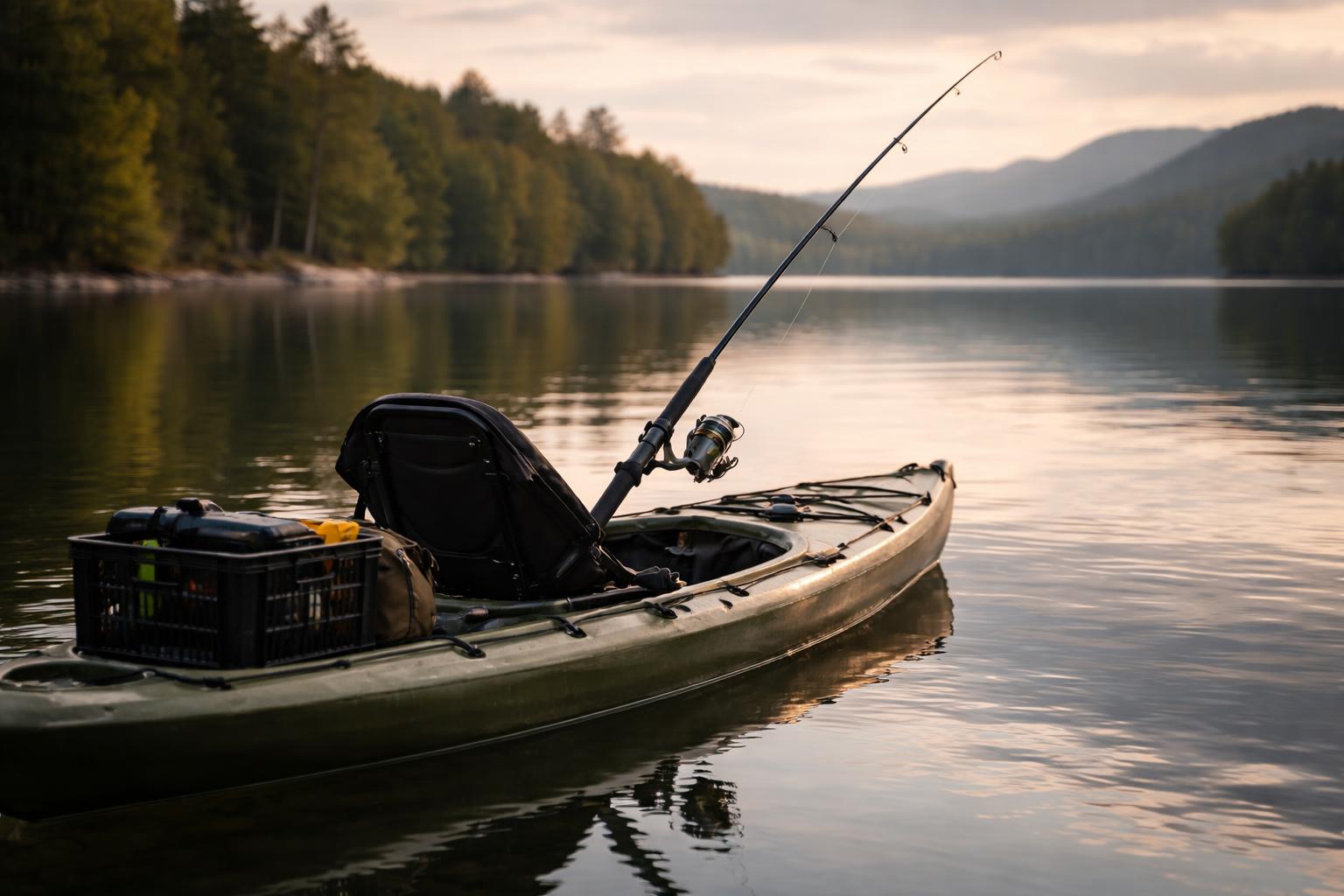
A fishing kayak is a purpose-built watercraft designed specifically for anglers, offering greater stability, integrated rod holders, generous gear storage, and mounts for accessories such as fish finders and GPS devices. Unlike traditional recreational kayaks, it is engineered to make casting, reeling, and landing fish more comfortable while allowing access to shallow water and remote fishing locations that larger boats often can’t reach.
Whether you enjoy fishing on lakes, rivers, or coastal waters, a fishing kayak provides a quiet, affordable, and highly versatile way to get closer to the action. This guide explains what a fishing kayak is, how it differs from other kayaks, its essential features, the different types available, and how to choose the best fishing kayak for your needs and budget.
Fishing Kayak at a Glance
| Feature | Details |
|---|---|
| Purpose | Designed specifically for fishing and angling activities |
| Best For | Lakes, rivers, ponds, bays, and calm coastal waters |
| Key Features | High stability, rod holders, gear storage, accessory mounts |
| Common Types | Sit-on-top, pedal-drive, inflatable, and tandem fishing kayaks |
| Propulsion | Paddle, pedal drive, or electric trolling motor |
| Standing Capability | Many models allow anglers to stand and cast comfortably |
| Storage Capacity | Built-in hatches, tank wells, and tackle storage compartments |
| Ideal Users | Beginners, recreational anglers, and experienced fishermen |
| Main Advantage | Easy access to shallow and hard-to-reach fishing spots |
| Price Range | Budget-friendly options to premium feature-rich models |
What Is a Fishing Kayak?
Definition of a Fishing Kayak
A fishing kayak is a specialized type of kayak meticulously designed and outfitted to enhance the angling experience, offering unparalleled access to prime fishing spots often inaccessible by larger boats. Unlike recreational kayaks, these vessels incorporate specific features such as robust stability, ample storage for fishing gear, and mounting options for essential accessories like rod holders and fish finders. They are purpose-built to accommodate the unique demands of kayak fishing, providing a stable platform for casting, retrieving, and landing fish while maintaining maneuverability.
Key Differences Between Fishing Kayaks and Other Kayaks
The distinction between fishing kayaks and other kayaks, such as recreational or touring models, lies primarily in their design and integrated features tailored for kayak anglers. Fishing kayaks typically boast a wider hull design for superior stability, crucial when casting or standing to sight fish, and a higher weight capacity to accommodate fishing rods, tackle boxes, and other essential gear. They often include integrated rod holders, spacious hatches for secure storage, and advanced propulsion options like pedal drive systems, allowing anglers to navigate hands-free while maintaining their lines in the water.
Who Is a Fishing Kayak For?
A fishing kayak is ideal for any angler who desires a more intimate connection with their environment, whether targeting fish in shallow water estuaries, tranquil lakes, or challenging river fishing currents. It caters to individuals seeking Stealth, portability, and the ability to reach secluded fishing spots inaccessible to traditional boats are key advantages of a tandem fishing kayak.. From the budget fishing kayak enthusiast just starting out in kayak fishing to the experienced kayak fisherman leveraging advanced pedal kayaks with electric motor capabilities, these vessels offer a versatile and rewarding platform for pursuing various species across diverse aquatic landscapes.
Key Features of a Fishing Kayak
Stability and Performance
When shopping for a fishing kayak, stability is often the primary concern for kayak anglers, especially those who plan to stand while casting or sight fishing. Modern fishing kayaks feature wider hulls and specialized hull designs, such as pontoon-style or tunnel hulls, to provide an exceptionally stable platform. This enhanced stability allows anglers to comfortably manage their fishing rods, retrieve fish, and even stand up for a better vantage point without the fear of tipping, making for a much safer and more effective fishing experience, particularly in varied water conditions.
Rod Holders and Storage Options
A well-equipped fishing kayak will boast numerous integrated features designed to secure and organize fishing gear. Flush-mounted rod holders are common, along with adjustable rod holders that can be positioned for trolling or active fishing. Storage options are plentiful, often including spacious bow and stern hatches for storing tackle boxesA first aid kit, fishing tackle, and other essential equipment are crucial for any kayaking adventure. Many kayak models also incorporate bungees and bungee cords on the deck, gear tracks for mounting accessories like a fish finder or GPS, and dedicated areas for securing a cooler or bait bucket, ensuring everything is within easy reach for the angler.
Pedal vs. Paddle Drive Systems
The choice between pedal and paddle drive systems significantly impacts the kayak fishing experience. Paddle kayaks offer simplicity and are often more budget-friendly, requiring the angler to use a paddle for propulsion, making them a popular choice for kayak fishing accessories. Pedal kayaks, like those from Hobie or Old Town, utilize a pedal drive system, freeing up the angler’s hands to manage fishing rods or bait, and enabling hands-free trolling. Some advanced pedal systems even allow for reverse, greatly enhancing maneuverability. Additionally, many fishing kayaks are now designed to accommodate an electric motor or trolling motor, providing even more versatility for covering water and maintaining position in currents.
Types of Fishing Kayaks
Sit-On-Top Fishing Kayaks
Sit-on-top fishing kayaks are by far the most popular choice for kayak anglers, renowned for their inherent stability, ease of entry and exit, and generous deck space. The open design allows for ample storage of fishing gear and accessories, making it simple to access tackle boxes, rod holders, and coolers. Their scupper holes provide self-draining capabilities, which is a significant advantage when fishing in choppy waters or launching a kayak from a wet area. This hull design is particularly appealing for those learning to kayak fish or individuals who prefer a less confined feeling while on the water.
Pedal Kayaks
Pedal kayaks represent a significant advancement in fishing from a kayak, offering hands-free propulsion that revolutionizes how anglers interact with their environment. Brands like Hobie and Old Town have popularized sophisticated pedal drive systems that allow for forward and often reverse movement, enabling precise boat positioning without the need for a paddle. This allows the kayak fisherman to keep their hands on their fishing rods, deploy a fish finder, or manage bait more effectively. The efficiency of a pedal system is particularly beneficial for covering large distances or maintaining position against currents, enhancing the overall fishing experience on a fishing platform.
Inflatable Fishing Kayaks
Inflatable fishing kayaks offer unparalleled portability and ease of storage, making them an excellent option for anglers with limited space or those who frequently travel to different fishing spots. Modern inflatable kayaks are remarkably durable, constructed from rugged PVC or hypalon, and feature multiple air chambers for added safety and rigidity, making them a great option for a fishing platform. While they may not offer the same hard-shell performance, many inflatable models, such as those from Jackson Kayak, are specifically designed with fishing in mind, incorporating features like rod holders, secure attachment points for gear, and even options for a small electric motor, proving that a budget fishing kayak can still be highly functional.
Fishing Kayak vs. Recreational Kayak
Comparison Table: Fishing Kayak vs. Recreational Kayak vs. Canoe
When considering a fishing kayak, it’s crucial to understand how it stacks up against recreational kayaks and canoes, as each boat offers distinct advantages for various water activities. A fishing kayak is purpose-built with features like rod holders, gear tracks, and enhanced stability for kayak anglers. Recreational kayaks prioritize ease of use and maneuverability for casual paddling, while canoes offer higher weight capacity and open space, suitable for multiple passengers or extensive gear, but are less stealthy for fishing. Understanding these differences helps in selecting the right kayak for your specific needs, particularly if your primary goal is to get into kayak fishing seriously.
Quick Pros & Cons of a Fishing Kayak
| ✅ Pros | ❌ Cons |
|---|---|
| Designed specifically for anglers with fishing-friendly features | Generally more expensive than recreational kayaks |
| Excellent stability for casting and reeling in fish | Heavier models can be difficult to transport |
| Built-in rod holders and ample gear storage | Pedal-drive systems may require additional maintenance |
| Can access shallow and hard-to-reach fishing spots | Premium accessories can increase the overall cost |
| Available in paddle, pedal, and motor-ready models | Larger kayaks require more storage space at home |
| Quiet operation helps avoid spooking fish | Wider hulls may sacrifice speed compared to touring kayaks |
| Many models support standing for sight fishing | Beginners may need time to learn proper handling and safety techniques |
Bottom Line: If your primary goal is fishing, a dedicated fishing kayak offers significant advantages in stability, storage, and convenience. However, it’s important to consider factors such as budget, transport, maintenance, and storage space before choosing the right model.
How to Choose the Best Fishing Kayak
Budget Considerations for Fishing Kayaks
Choosing the best fishing kayak often begins with a realistic assessment of your budget. A budget fishing kayak can still offer excellent features, particularly for those just starting kayak fishing 101, including options for a tandem kayak. Entry-level paddle kayaks are generally more affordable, while pedal kayaks, especially those from brands like Hobie or Old Town, represent a higher investment due to their advanced pedal drive systems and integrated fishing features. It’s important to consider not just the initial kayak cost, but also potential expenses for essential accessories like a paddle, life vest, fish finder, and kayak fishing accessories. Researching different kayak models and their pricing allows anglers to make an informed decision without overspending.
Specifications to Look for in a Fishing Kayak
When shopping for a fishing kayak, several key specifications should guide your decision to ensure you find the right kayak for your needs. Stability is paramount, often indicated by a wider hull design, crucial for standing to sight fish or battling larger catches. Consider the weight capacity to accommodate yourself, your fishing gear, and any additional accessories like a trolling motor or bait. Storage options, including hatches and gear tracks, are vital for organizing fishing rods and a first aid kit. For propulsion, evaluate whether a pedal system, electric motor, or traditional paddle kayak best suits your fishing style and the waters you intend to navigate, as this heavily influences the overall experience.
Real-World Scenarios: Lake, River, and Saltwater Fishing
The ideal fishing kayak varies significantly depending on whether you plan on lake fishing, river fishing, or venturing into saltwater. For lake fishing, a stable, full-size kayak with ample storage and a comfortable kayak seat is often preferred, allowing for long days on calm waters. River fishing demands a more maneuverable kayak, potentially shorter in length, with a durable hull to handle obstacles and currents, particularly in moving water.
A good rudder system is also beneficial for maintaining control while navigating through moving water. Saltwater fishing necessitates a highly stable boat, often with a longer hull design for tracking efficiency in open water, and corrosion-resistant components, as well as plenty of space for multiple fishing rods and a fish finder to locate schools of fish.
Common Mistakes When Buying a Fishing Kayak
Choosing the right fishing kayak involves more than picking the cheapest or most popular model. Avoid these common mistakes to ensure you get a kayak that matches your needs and provides a safe, enjoyable experience on the water.
1. Buying Solely Based on Price
A low-cost kayak may save money upfront but could lack essential features like stability, comfortable seating, or adequate storage. Focus on overall value rather than price alone.
2. Ignoring Transport Weight
Some fishing kayaks weigh more than 100 pounds, making them difficult to load, unload, or carry without assistance. Always consider how you’ll transport and store the kayak before buying.
3. Exceeding the Weight Capacity
Every kayak has a maximum weight limit that includes the paddler and all gear. Exceeding this capacity can reduce stability, affect performance, and increase safety risks.
4. Skipping Essential Safety Gear
Many beginners invest in fishing equipment but overlook safety essentials. A properly fitted personal flotation device (PFD), whistle, first-aid kit, and navigation lights for low-light conditions should be considered part of every outing.
5. Choosing Insufficient Storage
A kayak with limited storage can quickly become cluttered with tackle boxes, rods, coolers, and personal items. Select a model with enough compartments and cargo space for your typical fishing trips.
6. Overlooking Seat Comfort
Fishing often involves spending several hours on the water. An adjustable, well-padded seat with good back support can significantly improve comfort and reduce fatigue during long sessions.
Fishing Kayak Buying Checklist
Before purchasing a fishing kayak, use this checklist to make sure you’re choosing a model that fits your needs, budget, and fishing style.
| Checklist Item | What to Look For |
|---|---|
| Weight Capacity | Can safely support your body weight plus all fishing gear and accessories. |
| Stability | A wide, stable hull that allows comfortable casting and, if desired, standing while fishing. |
| Seat Comfort | An adjustable, supportive seat designed for long hours on the water. |
| Storage Space | Enough room for tackle boxes, coolers, rods, safety gear, and personal belongings. |
| Rod Holders | Built-in or adjustable rod holders for hands-free convenience. |
| Propulsion System | Choose between paddle, pedal drive, or motor-ready models based on your fishing style and budget. |
| Transport & Weight | Ensure the kayak is manageable to load, unload, and transport with your vehicle. |
| Fishing Environment | Select a kayak suited for lakes, rivers, or coastal waters where you plan to fish most often. |
| Accessory Compatibility | Check for mounting points for fish finders, GPS units, anchors, and other add-ons. |
| Safety Features | Look for grab handles, deck rigging, scupper holes, and space for essential safety equipment such as a PFD and first-aid kit. |
Quick Tip: The best fishing kayak isn’t necessarily the most expensive one—it’s the model that offers the right balance of stability, comfort, storage, and features for the waters you fish and the way you like to fish.
Safety Tips for Fishing Kayak Users
Fishing from a kayak can be enjoyable and rewarding, but staying safe on the water should always be your top priority. Keep these essential safety tips in mind before every trip:
- Wear a personal flotation device (PFD): Always wear a properly fitted life jacket, regardless of your swimming ability or water conditions.
- Check the weather forecast: Avoid heading out during storms, high winds, or rough water conditions that could make paddling dangerous.
- Stay within the kayak’s weight capacity: Include your body weight, fishing gear, coolers, and accessories when calculating the total load.
- Carry essential safety equipment: Bring a whistle, first-aid kit, flashlight or navigation light, and a waterproof phone or communication device for emergencies.
- Tell someone your plan: Let a friend or family member know where you’re fishing and when you expect to return.
- Dress for the conditions: Wear appropriate clothing for the water temperature and consider sun protection such as a hat, sunglasses, and sunscreen.
- Practice basic paddling and self-rescue skills: Learning how to re-enter your kayak after a capsize can improve confidence and preparedness.
- Secure your gear: Use leashes or straps for rods and important equipment to prevent losing them if the kayak tips or encounters rough water.
By following these simple precautions, you can reduce risks and enjoy a safer, more comfortable kayak fishing experience.
FAQs About Fishing Kayaks
1. Is a fishing kayak hard to paddle?
No most fishing kayaks are stable and easy to paddle, even for beginners, though wider hulls can feel slightly slower than touring kayaks.
2. Can you stand in a fishing kayak?
Yes, many fishing kayaks are designed with wide, stable hulls that let anglers stand safely while casting or sight fishing.
3. How much does a fishing kayak cost?
Prices range from around $300 for basic paddle models to $3,000+ for premium pedal-drive kayaks with motors and electronics.
4. Do I need a license to use a fishing kayak?
Most states don’t require a license for non-motorized kayaks, but you may need a fishing license and, in some states, kayak registration.
5. What’s the difference between a pedal and paddle fishing kayak?
Pedal kayaks use foot-powered drives for hands-free movement, while paddle kayaks rely on traditional paddling and are usually lighter and cheaper.
6. Are fishing kayaks safe in saltwater?
Yes, many models are built with corrosion-resistant hardware specifically for saltwater use, though regular rinsing after each trip is essential.
7. How long do fishing kayaks last?
With proper care, a quality fishing kayak can last 10+ years, especially hard-shell models stored out of direct sunlight.
8. Can one person carry a fishing kayak?
Lighter models (under 50 lbs) are easy to carry solo, but heavier pedal-drive kayaks often require a cart or a second person.
9. What size fishing kayak should a beginner buy?
Most beginners do well with a 10–12 foot sit-on-top kayak, offering a good balance of stability, storage, and maneuverability.
10. Do fishing kayaks tip over easily?
No modern fishing kayaks are engineered with wide, stable hulls specifically to resist tipping, even when standing or fighting a fish.

7 thoughts on “What Is a Fishing Kayak? 7 Essential Facts to Know”