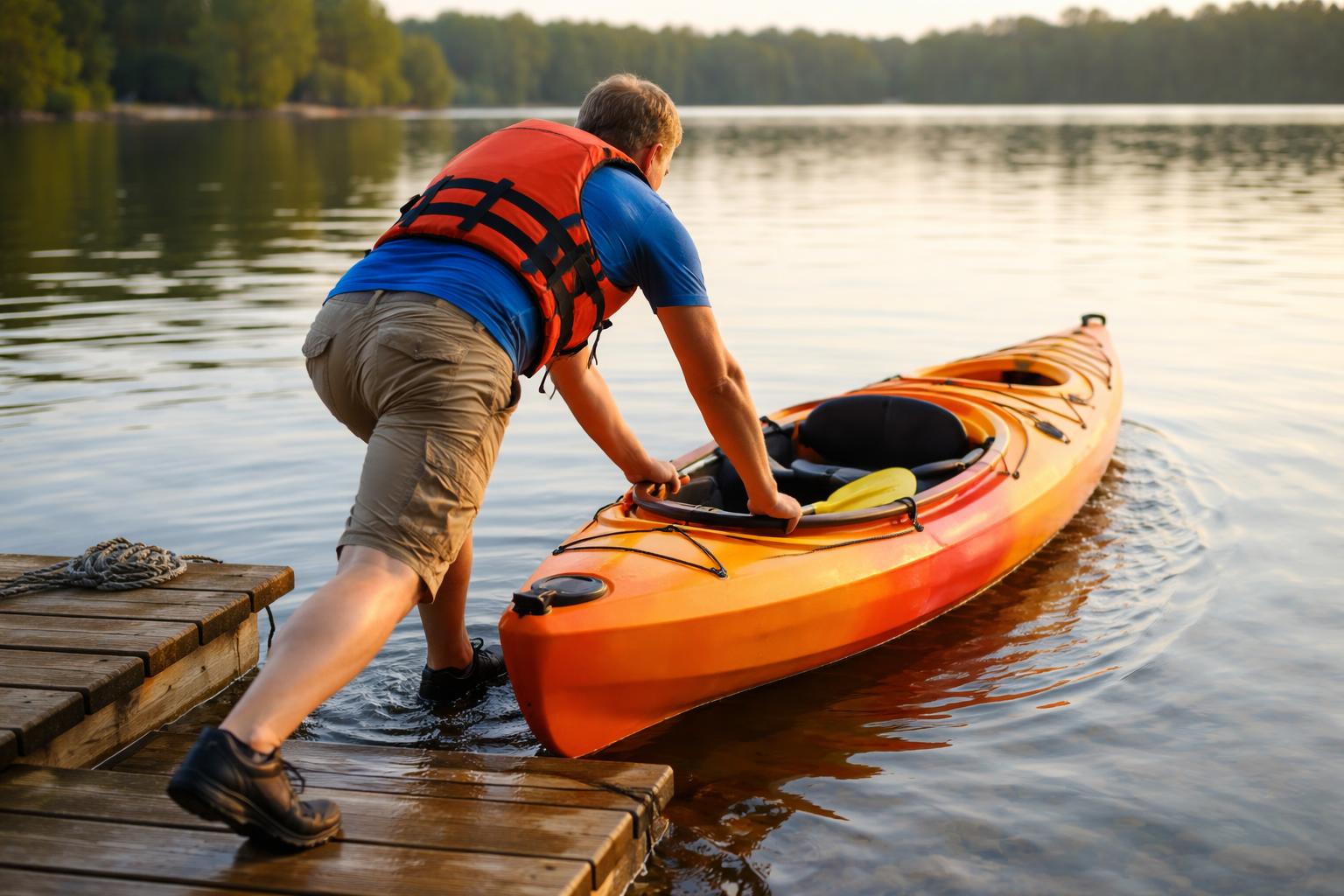
Choosing your first kayak can be exciting, and a little overwhelming, with so many options on the market. As a paddler with 15+ years of hands-on experience testing gear, I’ve put together this list of the best kayaks for beginners to help you cut through the noise and find a boat that’s actually right for a new paddler. We’ll cover what makes a kayak genuinely easy to start with, so your first few outings are safe, stable, and fun rather than stressful.
If you’re still not sure what size or type you need before comparing specific models, check out our companion guide: What Size Kayak Do I Need? first. This post picks up where that one leaves off, with specific product recommendations.
Quick TL;DR Overview
Top Pick: The Perception Swifty Deluxe 9.5 is our pick for best beginner kayak overall. It offers excellent stability and a comfortable ride, handling calm water beautifully. It’s a reliable, easy-to-manage sit-in option for new paddlers and, in our testing, the kayak that’s best for beginners who want one boat that does everything well.
Budget Pick: The Intex Explorer K2 Kayak is a surprisingly durable, stable inflatable that gets you on the water without a big upfront cost, a genuinely quality kayak for the price.
Best for Kids: The Lifetime Youth Wave Kayak is compact, lightweight, and stable, built specifically for younger paddlers learning the basics.
Author Experience
I’ve spent the last 15+ years paddling recreational, touring, and inflatable kayaks across lakes, slow rivers, and coastal bays, and testing gear for other beginners along the way. I remember exactly what it felt like buying my first kayak: too many options, too much conflicting advice, and no clear way to tell a genuinely good starter boat from a flashy but impractical one.
Every recommendation in this guide is based on a combination of hands-on paddling experience, hours spent reading through verified owner feedback on Amazon, and a consistent set of criteria (below), not sponsored placements or guesswork. Where I haven’t personally paddled a specific model, I’ve cross-referenced multiple independent owner reviews and cross-checked specs directly against manufacturer data.
What Makes a Kayak Beginner-Friendly?
Not every kayak on the market is a good starting point. Here’s what actually matters when you’re shopping for your first one, whether you land on a recreational, inflatable, or sit-on-top model.
Stability and Ease of Use
Stability is the number one factor for anyone new to paddling. A wider hull and flatter bottom generally deliver better primary stability: that solid, secure feeling when you first climb in. A genuinely stable kayak lets you focus on learning your paddle strokes instead of worrying about tipping. Ease of use also extends to how simple it is to get in and out, which matters if you’re launching from a dock or shallow shoreline.
Weight Capacity Considerations
Pay close attention to weight capacity, and don’t just cut it close to your own body weight. Factor in gear, a cooler, or a passenger. Going over the limit makes a boat feel sluggish and less stable. Aim for a model with some buffer room above what you actually need.
Sit-On-Top vs. Sit-In (Sit-Inside) Kayaks
Sit-on-top kayaks are often the easier starting point. They’re stable, self-bailing (water drains out through scupper holes), and simple to climb back onto if you tip over. Sit-inside kayaks offer more protection from wind and spray and often track straighter, but re-entry after a capsize takes more practice. If you’re nervous about the water, start with sit-on-top; if you want more shelter from cold or wind, sit-in is worth the tradeoff.
Different Types of Kayaks Explained
Before you compare specific models, it helps to understand the different types of kayaks on the market and where beginners typically fit in:
- Recreational kayaks: Shorter, wider hulls built for calm lakes and slow rivers. This is the most common and most beginner-friendly type of kayak, and most of the picks in this guide fall into this category.
- Touring kayaks: Longer and narrower, built for covering more distance efficiently. Great once you’ve built confidence, but a touring kayak can feel less stable and less forgiving for a first-timer.
- Inflatable kayaks: A lightweight kayak option that trades some speed and tracking for portability and easy storage. Modern inflatables have come a long way and several are genuinely quality kayaks, not just a compromise.
- Sit-on-top kayaks: Open-cockpit, easy re-entry, self-draining. A great choice for nervous beginners, warm-water paddling, or fishing.
- Sit-inside kayaks: Enclosed cockpit, better protection from wind and spray, generally better tracking.
- Tandem kayaks: Built for two paddlers; several models on this list (like the Intex Explorer K2) work as both a solo and tandem kayak depending on setup.
- Whitewater kayaks: Short, highly maneuverable boats built for rapids. Not a beginner category; skip these until you’ve built real skills, or start with a rugged inflatable like the Driftsun Rover that can handle mild moving water.
Shorter kayaks generally win on stability and ease of maneuvering; longer boats win on speed and tracking. As a beginner, lean shorter and more stable first. You can always size up once you know what kind of paddling you enjoy most.
How We Chose These Kayaks
My selection process comes from years of paddling and testing, combined with digging through real owner feedback, not just spec sheets.
Criteria: Stability, ease of transport/storage, build quality, and manufacturer reputation top the list. A first boat needs to be forgiving on the water and manageable off it.
Real owner reviews: I cross-check my own impressions against verified Amazon reviews, looking for recurring themes around stability, comfort, and common complaints, not just the star average.
Price-to-value: The right first kayak isn’t automatically the cheapest or the most expensive one. It’s the one that delivers real durability and a good experience for what you’re paying.
Comparison Score methodology: Each kayak below is scored out of 10 across four weighted categories: Stability (40%), Value (25%), Portability (20%), and Beginner-Friendliness (15%), based on a combination of spec analysis, owner review sentiment, and hands-on paddling experience where applicable.
Top Kayak Picks for Beginners
Intex Explorer K2 Kayak
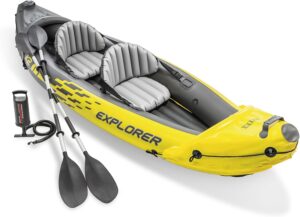
Who it’s for: Paddlers who need an ultra-portable, affordable option for calm lakes and slow rivers, great if storage space is limited or you want a two-person, tandem kayak setup without hardshell bulk.
Verdict Box
✅ Buy if: You want the cheapest realistic way into kayaking, need tandem capacity, or have very limited storage space. ❌ Skip if: You’ll be paddling in windy, open, or fast-moving water often. Comparison Score: 8.4/10
Specifications
| Spec | Detail |
|---|---|
| Length | 10’3″ |
| Width | 3’1″ |
| Weight Capacity | 400 lbs |
| Kayak Weight | 30.6 lbs |
| Material | PVC |
| Price | $100–$150 (verify current price) |
| Rating | 4.4★ (59,000+ ratings, Amazon’s Choice; verify current) |
Pros & Cons
| Pros | Cons |
|---|---|
| Stable and comfortable for an inflatable | Struggles to track straight in wind |
| Genuinely durable construction | Slower than hardshell kayaks |
| Packs down small, easy to store | Setup/breakdown takes extra time |
| Includes paddles and pump | N/A |
Why We Recommend It: At this price point, nothing else on the market matches its combination of stability, high weight capacity (400 lbs is generous even for two paddlers plus gear), and included accessories. It’s the lowest-risk way to find out if you actually enjoy kayaking before investing more, and a genuinely good option for beginners who just want to try the sport first.
What owners say: Reviewers frequently point to its stability and easy setup as standout traits, along with strong value for casual, calm-water paddling.

- Experience Premium Performance: The Perception Flash 9.5 Sit Inside Kayak delivers an exceptional blend of stability and…
- Lightweight for Ease of Use: At a weight of just 41 lbs, this kayak is easy to carry and maneuver. Its compact size does…
- Versatile and Ready for Adventure: Built-in rod holders make this kayak an angler’s dream, while the rear storage compar…
Lifetime Youth Wave Kayak
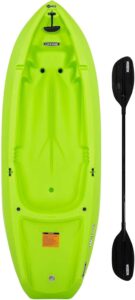
Who it’s for: Younger paddlers learning the ropes on calm lakes and ponds. Lightweight enough for kids to manage on their own.
Verdict Box
✅ Buy if: You’re buying a first kayak specifically for a child, ideally ages 5–10. ❌ Skip if: The paddler is a teenager or adult. This will feel cramped and undersized fast. Comparison Score: 8.7/10 (within its intended use case)
Specifications
| Spec | Detail |
|---|---|
| Length | 6′ |
| Width | 24″ |
| Weight Capacity | 130 lbs |
| Kayak Weight | 18 lbs |
| Material | High-Density Polyethylene |
| Price | $130–$170 (verify current price) |
| Rating | 4.7★ (15,000+ ratings, Amazon’s Choice; verify current) |
Pros & Cons
| Pros | Cons |
|---|---|
| Exceptionally stable and tip-resistant for kids | Very limited weight capacity |
| Lightweight, kids can carry it themselves | Not built for speed or distance |
| Includes a paddle | Minimal storage space |
| Durable, comfortable molded seat | N/A |
Why We Recommend It: It’s purpose-built rather than a scaled-down adult kayak, which shows in the stability and how easily kids build confidence in it. The light weight also means a child can genuinely help carry and launch it, which matters for independence and enjoyment.
What owners say: Parents consistently praise this beginner kayak for its excellent stability and safety features, noting how quickly their children gain confidence.

- Constructed of High Density Polyethylene for superior strength and durability
- Molded finger handles on each side of kayak for easy transport to and from the water
- Swim-up step allows rider to easily re-enter kayak from the water
Perception Swifty Deluxe 9.5
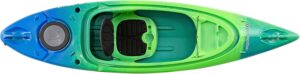
Who it’s for: Adult beginners who want a versatile, stable sit-in boat for calm water, slow rivers, and small lakes, comfortable without the commitment of a full touring kayak.
Verdict Box
✅ Buy if: You want the best all-around balance of stability, comfort, and price for a sit-in kayak. ❌ Skip if: You need to carry the kayak solo over long distances; it’s on the heavier side. Comparison Score: 9.1/10
Specifications
| Spec | Detail |
|---|---|
| Length | 9’6″ |
| Width | 28.5″ |
| Weight Capacity | 300 lbs |
| Kayak Weight | 44 lbs |
| Material | High-Density Polyethylene |
| Price | $500–$600 (verify current price) |
| Rating | 4.6★ (700+ ratings; verify current) |
Pros & Cons
| Pros | Cons |
|---|---|
| Strong stability and tracking for its length | Heavier, solo transport is a bit of a chore |
| Adjustable seat and backrest | Cockpit runs snug for larger paddlers |
| Stern hatch for storage | Not made for rough water |
| Solidly built | N/A |
Why We Recommend It: This is the boat that balances every major beginner priority at once: stability, comfort, tracking, and storage, without the tradeoffs that come with cheaper inflatables or pricier touring kayaks. If you’re asking “what’s the right kayak for someone who just wants to get on the water without overthinking it,” this is it.
What owners say: Reviewers consistently call out the balance of stability and maneuverability, plus the comfortable seat and handy storage hatch.
- Experience Premium Performance: The Perception Flash 9.5 Sit Inside Kayak delivers an exceptional blend of stability and…
- Lightweight for Ease of Use: At a weight of just 41 lbs, this kayak is easy to carry and maneuver. Its compact size does…
- Versatile and Ready for Adventure: Built-in rod holders make this kayak an angler’s dream, while the rear storage compar…
Sevylor Quikpak K1 1-Person Kayak
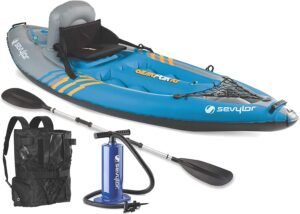
Who it’s for: Solo paddlers who want maximum portability and a quick setup. This one folds into its own backpack, great for spontaneous trips to calm water.
Verdict Box
✅ Buy if: You don’t own a vehicle roof rack or truck bed and need something you can carry on foot or in a car trunk. ❌ Skip if: You want good tracking or plan to paddle longer distances. Comparison Score: 7.8/10
Specifications
| Spec | Detail |
|---|---|
| Length | 8’7″ |
| Width | 3′ |
| Weight Capacity | 250 lbs |
| Kayak Weight | 18 lbs |
| Material | PVC |
| Price | $150–$200 (verify current price) |
| Rating | 4.4★ (5,900+ ratings, Amazon’s Choice; verify current) |
Pros & Cons
| Pros | Cons |
|---|---|
| Extremely portable | Shorter length hurts tracking |
| Fast setup via integrated backpack | Not fast on the water |
| Surprisingly stable for an inflatable | Tight on storage once inflated |
| Very lightweight | Included paddle is basic |
Why We Recommend It: No other kayak on this list solves the “I don’t have a way to transport a kayak” problem this well. If storage or vehicle limitations are your main barrier to getting started, this removes that excuse entirely. It’s easy to transport and easier to store than anything else here.
What owners say: The backpack-to-boat design gets praised repeatedly as a game-changer for convenience among casual paddlers.

- 90-DAY LIMITED WARRANTY
- Easy-to-carry backpack system turns into the seat
- 21-gauge PVC construction is rugged for lake use
Intex Challenger K1 Kayak
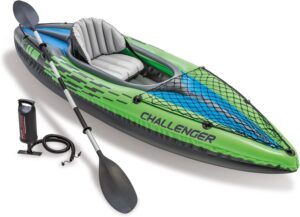
Who it’s for: Solo paddlers who want to try kayaking without a big financial commitment or storage hassle.
Verdict Box
✅ Buy if: You want to test whether kayaking is for you at the lowest possible price point. ❌ Skip if: You’re taller/larger; the cockpit runs tight. Comparison Score: 7.9/10
Specifications
| Spec | Detail |
|---|---|
| Length | 9′ |
| Width | 2’6″ |
| Weight Capacity | 220 lbs |
| Kayak Weight | 23.5 lbs |
| Material | PVC |
| Price | $90–$120 (verify current price) |
| Rating | 4.5★ (24,000+ ratings, Amazon’s Choice; verify current) |
Pros & Cons
| Pros | Cons |
|---|---|
| Stable and forgiving | Less durable than a hardshell |
| Very affordable | Wind affects tracking |
| Complete kit with paddle and pump | Slower on the water |
| Light and easy to store | Cockpit is tight for bigger paddlers |
Why We Recommend It: It’s the cheapest kayak on this list that still gets consistently strong stability reviews rather than being a compromise-everywhere budget option, stable enough for beginners who just want to find out if they like the sport, without the price tag of a hardshell.
What owners say: Consistently rated as a strong value entry point, with reviewers noting it comes ready to paddle right out of the box.

- Plastic
- Imported
- SUPER-STRONG – SuperStrong enhanced molecular formulation PVC provides superior strength and durability, ensuring high i…
Pelican Sentinel 100X EXO
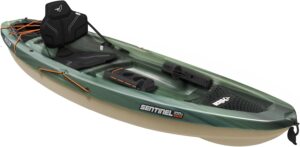
Who it’s for: Paddlers who want a stable, versatile sit-on-top for calm lakes, slow rivers, and coastal bays, with easy re-entry and open-cockpit freedom.
Verdict Box
✅ Buy if: You want the ease of a sit-on-top with real storage capacity for day trips. ❌ Skip if: You’re often paddling in windy, open conditions. Comparison Score: 8.8/10
Specifications
| Spec | Detail |
|---|---|
| Length | 9’6″ |
| Width | 30″ |
| Weight Capacity | 275 lbs |
| Kayak Weight | 44 lbs |
| Material | RAM-X (High-Density Polyethylene) |
| Price | $350–$450 (verify current price) |
| Rating | 4.6★ (1,000+ ratings, Amazon’s Choice; verify current) |
Pros & Cons
| Pros | Cons |
|---|---|
| Very forgiving primary stability | Wind affects tracking |
| Padded ErgoForm backrest | Not built for speed |
| Large storage hatch plus bungee storage on top of the kayak | Seat could use more lower-back support |
| Light for its size | N/A |
Why We Recommend It: It hits a sweet spot sit-in kayaks can’t match for nervous beginners. The open cockpit means there’s no “am I going to get stuck if I flip” anxiety, while still offering real storage for a cooler or dry bag on day trips. The bungee webbing across the bow and stern also makes it easy to strap down extra gear.
What owners say: Owners regularly highlight the stability and comfort, along with how convenient the storage setup is for day trips.

- A multi chine flat bottom hull ensures the stability needed when casting lines and reeling in fish.
- Measuring 9’6″” and weighing only 44 lb, the SENTINEL 100X ANGLER is incredibly easy to transport and store
- Made using our patented Ram-X materials, the SENTINEL 100X ANGLER will be around for years of exciting experiences.The b…
Emotion Spitfire 8 Sit-On-Top Kayak
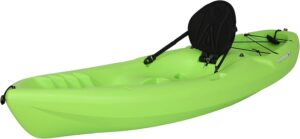
Who it’s for: Paddlers who want an easy-to-transport sit-on-top for calm water, light chop, or light kayak fishing.
Verdict Box
✅ Buy if: You want a compact, easy-to-load sit-on-top, especially for fishing or exploring tight waterways. ❌ Skip if: You’re tall or plan on covering long, straight distances. Comparison Score: 8.0/10
Specifications
| Spec | Detail |
|---|---|
| Length | 8′ |
| Width | 31″ |
| Weight Capacity | 240 lbs |
| Kayak Weight | 40 lbs |
| Material | High-Density Polyethylene |
| Price | $350–$450 (verify current price) |
| Rating | 4.6★ (700+ ratings; verify current) |
Pros & Cons
| Pros | Cons |
|---|---|
| Stable and easy to get on and off | Shorter length hurts straight-line tracking |
| Excellent maneuverability, easy to maneuver into tight spots | Slower than longer kayaks |
| Comfortable adjustable padded seat | Limited storage for extended trips |
| Includes storage hatch and bungee cords | Can feel small for taller paddlers |
Why We Recommend It: Its short length is actually an advantage for beginners who’ll mostly be exploring coves, weaving around obstacles, or fishing in tight spots rather than covering long, straight distances.
What owners say: Its compact size is frequently mentioned as a benefit for solo loading and transport.

- Constructed of High Density Polyethylene for superior strength and durability; 240 lb. weight capacity
- ST Performance Hull offers execptional stability and tracking
- Front, rear, and side carry handles for easy transport
Wilderness Systems Pungo 105
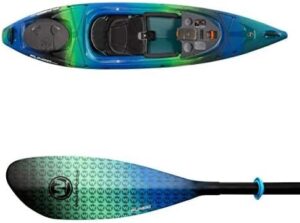
Who it’s for: Beginners who want to invest in a higher-end sit-in boat that blends stability with real performance, good for larger paddlers or anyone who wants a boat they can grow into.
Verdict Box
✅ Buy if: You’re confident kayaking will be a long-term hobby and want a boat that won’t feel limiting as your skills grow. ❌ Skip if: You’re not sure you’ll stick with kayaking, or need to load it solo often. Comparison Score: 9.3/10
Specifications
| Spec | Detail |
|---|---|
| Length | 10’6″ |
| Width | 30.5″ |
| Weight Capacity | 300 lbs |
| Kayak Weight | 52 lbs |
| Material | Polyethylene |
| Price | $900–$1,100 (verify current price) |
| Rating | 4.8★ (200+ ratings; verify current) |
Pros & Cons
| Pros | Cons |
|---|---|
| Exceptional stability and tracking for a sit-in | Higher price point |
| Incredibly comfortable Phase 3 AirPro seat | Heavier, harder for solo loading |
| Generous sealed stern hatch storage | Cockpit entry snug for very large paddlers |
| Excellent build quality | N/A |
Why We Recommend It: This is the boat to buy if you already know you’re committing to kayaking as a hobby. The seat comfort and tracking performance mean you won’t outgrow it the way you might a $150 inflatable after your first season. Wilderness Systems also makes a slightly larger Pungo 120 kayak if you want extra storage and weight capacity for longer trips.
What owners say: Paddlers highlight the blend of stability and efficiency, often calling it the best option for beginners willing to invest more.
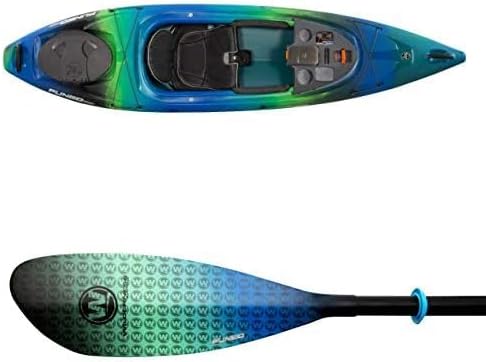
- Great things come in a small package, with this easy-to-manage kayak
- Designed for use with Wilderness Systems Punto kayaks (all sizes/Model years)
- Best-in-class speed makes the Pungo the easiest to paddle and most efficient kayak in its class
Driftsun Rover 120/220 Inflatable Kayak
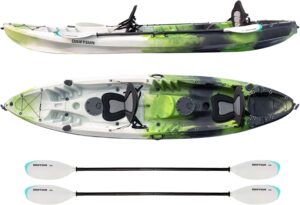
Who it’s for: Paddlers who want a rugged inflatable that can handle calm water and mild whitewater (up to Class III). Comes in solo (120) or tandem (220).
Verdict Box
✅ Buy if: You want an inflatable that can handle more than flat water, including mild rapids. ❌ Skip if: You only ever paddle calm lakes, you’re paying for capability you won’t use. Comparison Score: 8.5/10
Specifications
| Spec | Rover 120 (Solo) | Rover 220 (Tandem) |
|---|---|---|
| Length | 8’6″ | 12’6″ |
| Width | 36″ | 38″ |
| Weight Capacity | 300 lbs | 600 lbs |
| Kayak Weight | 22 lbs | 37 lbs |
| Material | Reinforced PVC | Reinforced PVC |
| Price | $600–$700 (verify) | $800–$900 (verify) |
| Rating | 4.6★ (400+ ratings; verify current) | 4.6★ (400+ ratings; verify current) |
Pros & Cons
| Pros | Cons |
|---|---|
| Extremely durable, handles rougher conditions | Pricier than most inflatables |
| Stable on both calm and moving water | Heavier than basic inflatables |
| Comfortable adjustable seats | Stock paddles are just okay |
| Quick to inflate and deflate | Tracking is average without the fin attached |
Why We Recommend It: It’s the only inflatable on this list rated for mild whitewater, which makes it the right kayak if you think you’ll eventually want to paddle beyond flat lakes without buying a second, hardshell kayak.
What owners say: Owners consistently point to the durability and versatility, especially for paddlers who want a boat that can handle more than flat water.

- Recreational Tandem Kayak – 12’2ft 2 Person Kayak is perfect for Fishing, Travel, or Family Recreation – 500 pound weigh…
- Tough and Rugged Design – Hull is constructed from single piece rotomolded UV Resistant high density polyethylene for un…
- Fully Outfitted – Our kayaks for adults hard shell comes loaded with great features: 4 flush mount capped rod holders an…
Other Trusted Beginner Kayak Brands Worth Knowing
The nine kayaks above are our tested top picks, but a few other manufacturers consistently make great kayaks worth knowing about as you shop:
- Old Town: One of the most established names in recreational kayaks, known for solid, no-frills hardshell models that hold up well over years of use.
- Oru Kayak: Makes origami-style folding hardshell kayaks. A clever option if you love the idea of a hardshell’s performance but need Sevylor-level portability.
- Jackson Kayak: Better known among more experienced paddlers and anglers, but their entry-level recreational and fishing models are worth a look once you’ve outgrown a true starter boat.
We haven’t tested models from these brands closely enough to include a full review here, but they’re reputable names you’ll see recommended elsewhere and are safe to consider if one of our top picks isn’t the right fit.
Kayak Fishing for Beginners
A few models on this list, especially the Emotion Spitfire 8 and Pelican Sentinel 100X EXO, double as capable entry points into kayak fishing thanks to their open, stable sit-on-top decks. If fishing is part of why you’re getting into kayaking, keep an eye out for:
- Rod holders: Some sit-on-top kayaks include a rod holder or two out of the box; others require aftermarket fishing rod holders you can add later.
- Flat, stable decks: You’ll want to stand or lean occasionally, so extra primary stability matters even more for kayak fishing than casual paddling.
- Extra storage: Tackle boxes and coolers add up fast, so a generous storage hatch or bungee webbing is a real asset.
None of the picks above are dedicated fishing kayaks (those typically add pedal drives and specialized storage), but several are a genuinely good starting point if you want to dip a line in occasionally without buying a second, specialized boat.
At-a-Glance Recommendations
If you want the short version before comparing every specification, here are our top recommendations based on different needs.
| Need | Best Kayak | Why We Recommend It |
|---|---|---|
| 🏆 Best Overall | Perception Swifty Deluxe 9.5 | Excellent stability, comfort, and beginner-friendly handling. |
| 💰 Best Budget | Intex Explorer K2 | Affordable, stable, and includes essential accessories. |
| 🎒 Best Inflatable | Driftsun Rover 120 | Durable construction with the versatility to handle calm water and mild rapids. |
| 👨👩👧 Best Tandem | Intex Explorer K2 | Spacious two-person design at an affordable price. |
| 👦 Best for Kids | Lifetime Youth Wave | Lightweight, stable, and designed specifically for young paddlers. |
| 🛶 Best Sit-On-Top | Pelican Sentinel 100X EXO | Stable, easy to enter and exit, and ideal for relaxed recreational paddling. |
| ⭐ Best Premium | Wilderness Systems Pungo 105 | Outstanding comfort, tracking, and long-term performance for serious beginners. |
Side-by-Side Comparison Table
| Kayak | Length | Width | Weight Capacity | Kayak Weight | Price Range | Rating | Score |
|---|---|---|---|---|---|---|---|
| Intex Explorer K2 | 10’3″ | 3’1″ | 400 lbs | 30.6 lbs | $100–$150 | 4.4★ | 8.4/10 |
| Lifetime Youth Wave | 6′ | 24″ | 130 lbs | 18 lbs | $130–$170 | 4.7★ | 8.7/10 |
| Perception Swifty Deluxe 9.5 | 9’6″ | 28.5″ | 300 lbs | 44 lbs | $500–$600 | 4.6★ | 9.1/10 |
| Sevylor Quikpak K1 | 8’7″ | 3′ | 250 lbs | 18 lbs | $150–$200 | 4.4★ | 7.8/10 |
| Intex Challenger K1 | 9′ | 2’6″ | 220 lbs | 23.5 lbs | $90–$120 | 4.5★ | 7.9/10 |
| Pelican Sentinel 100X EXO | 9’6″ | 30″ | 275 lbs | 44 lbs | $350–$450 | 4.6★ | 8.8/10 |
| Emotion Spitfire 8 | 8′ | 31″ | 240 lbs | 40 lbs | $350–$450 | 4.6★ | 8.0/10 |
| Wilderness Systems Pungo 105 | 10’6″ | 30.5″ | 300 lbs | 52 lbs | $900–$1,100 | 4.8★ | 9.3/10 |
| Driftsun Rover 120 (solo) | 8’6″ | 36″ | 300 lbs | 22 lbs | $600–$700 | 4.6★ | 8.5/10 |
| Driftsun Rover 220 (tandem) | 12’6″ | 38″ | 600 lbs | 37 lbs | $800–$900 | 4.6★ | 8.5/10 |
All prices and ratings should be confirmed on Amazon before purchase, as they change frequently. Comparison scores reflect stability, value, portability, and beginner-friendliness — see methodology above.
Best Kayaks by Category
Still deciding? Here’s a quick breakdown of which kayak stands out for different types of paddlers.
- Best Overall: Perception Swifty Deluxe 9.5
- Best Budget Pick: Intex Explorer K2
- Best Premium Kayak: Wilderness Systems Pungo 105
- Best Inflatable: Driftsun Rover 120
- Best Tandem Kayak: Intex Explorer K2
- Best Sit-On-Top: Pelican Sentinel 100X EXO
- Best Sit-In (Sit-Inside): Perception Swifty Deluxe 9.5
- Best for Kids: Lifetime Youth Wave
- Best for Easy Transport: Sevylor Quikpak K1
- Best for Small Storage Spaces: Intex Challenger K1
These recommendations are based on stability, beginner-friendliness, portability, value, and long-term usability.
Kayak Weight Chart: Can You Carry It Solo?
If you don’t have help loading and unloading, the kayak’s own weight matters as much as anything else on this list. Here’s how these picks stack up, lightest to heaviest:
| Kayak | Weight | Solo-Carry Difficulty |
|---|---|---|
| Sevylor Quikpak K1 | 18 lbs | Very easy, a genuinely lightweight kayak |
| Lifetime Youth Wave | 18 lbs | Very easy (kid-carryable) |
| Driftsun Rover 120 (solo) | 22 lbs | Very easy |
| Intex Challenger K1 | 23.5 lbs | Easy |
| Driftsun Rover 220 (tandem) | 37 lbs | Moderate |
| Intex Explorer K2 | 30.6 lbs | Easy–moderate |
| Emotion Spitfire 8 | 40 lbs | Moderate, manageable solo |
| Perception Swifty Deluxe 9.5 | 44 lbs | Moderate, best with a cart or second person |
| Pelican Sentinel 100X EXO | 44 lbs | Moderate, best with a cart or second person |
| Wilderness Systems Pungo 105 | 52 lbs | Harder solo; a kayak cart is worth it |
Rule of thumb: If a kayak weighs more than about 35–40 lbs and you’ll be carrying it alone regularly (especially any real distance from car to water), a wheeled kayak cart (usually $30–$60) makes a big difference and is worth budgeting for alongside the boat itself.
What to Look for in a Beginner Kayak
Understanding Kayak Types
Most new paddlers choose between recreational kayaks (shorter, wider, casual) and inflatables (portable, easy to store). Sit-on-top and sit-inside are the other major fork in the road; pick based on your comfort level and where you’ll be paddling. See the full breakdown of different types of kayaks above if you’re still deciding.
Key Specs to Consider
Length and width drive stability versus tracking: shorter and wider means more stable but less efficient in a straight line. It also helps to know basic kayak anatomy: the bow is the front, the stern is the back, and most storage hatches and bungee webbing sit near the bow and stern rather than the cockpit. Weight capacity needs headroom for gear, not just your body weight, and the boat’s own weight determines how easily you can load and carry it solo (see the weight chart above).
Material Differences
Hardshell boats are typically high-density polyethylene, a durable, impact-resistant plastic kayak material that’s reasonably priced. Inflatables use PVC or reinforced fabrics, trading some durability for major gains in portability and storage. Neither is “better”; it depends on your storage situation and how you’ll use it.
Choosing the Best Kayak for Beginners: Buying Guide
If you’re still torn between a few options, work through these questions in order to find the perfect kayak for your situation:
- Where will you paddle most? Calm lake or pond → almost anything on this list works. Slow river → prioritize tracking (longer, narrower hulls). Coastal bay → look for a sit-on-top with good stability in light chop, like the Pelican Sentinel.
- How will you transport it? No roof rack or truck → look seriously at the inflatables (Intex, Sevylor, Driftsun); they’re easy to transport and easier to store. Have a vehicle rack → hardshells like the Perception or Wilderness Systems open up.
- Who’s paddling: just you, or with a kid/partner? Solo → any 1-person model. Want to bring a child sometimes → consider a tandem kayak like the Intex Explorer K2 or Driftsun Rover 220 instead of buying two boats.
- What’s your realistic budget? Under $200 → inflatables are your best value. $350–$600 → sit-on-top or entry sit-in hardshells. $900+ → only worth it if you’re confident this becomes a regular hobby.
- How much storage space do you have? Garage/shed with room → hardshell is fine. Apartment/limited space → a lightweight kayak or inflatable is the practical choice.
If you’re a beginner and not sure kayaking is for you yet, remember that a kayak rental is a low-commitment way to test the waters (literally) before buying. Most lakeside outfitters and state parks offer hourly or day rentals.
Common Beginner Mistakes to Avoid
Buying based on price alone. The cheapest option isn’t always the best value; factor in weight capacity, stability, and what’s actually included (paddle, pump, etc.).
Ignoring weight capacity math. Don’t just check that your body weight fits; add the weight of a cooler, dry bag, dog, or passenger before assuming a kayak has enough room.
Skipping the “how will I transport this” question. A great kayak you can’t get to the water is useless. Confirm you can actually carry, strap down, or fit the boat before buying.
Assuming bigger is always better. A longer, faster touring kayak sounds appealing, but it’s often harder to handle and less forgiving for someone still learning basic strokes and balance. Shorter kayaks are usually easier to maneuver as a beginner.
Not budgeting for accessories. A paddle, life jacket (PFD), and dry bag aren’t always included; factor these into your total cost, not just the kayak price.
Overlooking your paddling partner’s needs. If you’ll often paddle with a partner, a tandem kayak or two matched solo kayaks may serve you better than one solo boat and a rental every time.
Safety Essentials for New Kayakers
Kayaking is a low-risk activity when you take a few basic precautions seriously:
- Always wear a properly fitted life jacket (PFD), even on calm water. According to the American Canoe Association, a correctly worn PFD is the single most effective piece of safety equipment for any paddler.
- Check the weather and water conditions before heading out wind and afternoon storms can turn calm water choppy fast, especially on open lakes or bays.
- Tell someone your paddling plan: where you’re launching, your route, and roughly when you’ll be back.
- Practice a wet exit and re-entry in shallow water first, especially if you choose a sit-inside kayak, so it’s not your first experience if you tip over unexpectedly.
- Stay close to shore while you’re still learning, and avoid paddling alone in open or fast-moving water until you’re confident in your skills.
- Dress for the water temperature, not the air temperature cold water is the real risk factor for capsizing, not cold air.
Maintenance Checklist for Your First Kayak
Keeping your kayak in good shape is simple but easy to skip when you’re new. After every outing:
- Rinse the kayak thoroughly with fresh water, especially the cockpit, hatches, and any moving parts (removes salt, sand, and debris)
- Wipe down and dry the seat and any fabric components to prevent mildew
- Check for scratches, punctures, or soft spots (inflatables especially)
- Store out of direct sunlight to prevent UV damage to the hull material
- For inflatables: make sure it’s completely dry before deflating and storing
- Store flat or properly supported (not hanging by straps in a way that warps the hull)
- Once or twice a season: inspect hardware (hatches, bungees, footrests) for wear and tighten/replace as needed
Frequently Asked Questions
1. What type of kayak is best for beginners?
Sit-on-top and recreational sit-in kayaks are generally the best choices for beginners because they offer excellent stability, easy handling, and a comfortable learning experience.
2. What size kayak should a beginner buy?
Most beginners do well with a kayak between 9 and 12 feet long, as it provides a good balance of stability, maneuverability, and tracking.
3. Are inflatable kayaks good for beginners?
Yes. High-quality inflatable kayaks are stable, portable, and easy to store, making them an excellent option for beginners with limited storage space.
4. How much should I spend on my first kayak?
A beginner can expect to spend $300–$700 for a reliable recreational kayak, while quality inflatable models often start around $100–$300.
5. Is a sit-on-top kayak safer than a sit-in kayak?
Sit-on-top kayaks are often considered safer for beginners because they’re easier to climb back onto after entering the water.
6. Can beginners use a fishing kayak?
Yes. Many fishing kayaks are beginner-friendly, especially models with a wide hull that provides extra stability on calm water and a rod holder or two built in.
7. What safety gear do beginner kayakers need?
Every beginner should wear a properly fitted PFD (life jacket) and carry a whistle, drinking water, and basic safety equipment before heading out.
8. Can one person carry a kayak?
Yes. Most recreational kayaks weigh between 35 and 60 pounds, while inflatable kayaks are even lighter and easier to transport.
9. Where should beginners kayak first?
Beginners should practice on calm lakes, ponds, or slow-moving rivers before attempting larger lakes, coastal waters, or fast currents.
10. How do I maintain my beginner kayak?
Rinse your kayak after each trip, let it dry completely, store it away from direct sunlight, and inspect it regularly for damage to extend its lifespan.
Who Should Skip This Guide?
This guide is designed specifically for recreational beginners looking for their first kayak. If your needs fall into one of the categories below, you’ll likely benefit from a more specialized guide instead.
- Whitewater paddlers who need kayaks built for rapids and technical river conditions.
- Sea or touring kayakers planning long-distance trips on open water.
- Competitive paddlers looking for lightweight, high-speed performance kayaks.
- Experienced anglers who require advanced fishing kayaks with pedal drives, electronics, or large gear storage.
- Expedition paddlers carrying heavy camping equipment for multi-day adventures.
If you’re simply looking for a safe, stable, and easy-to-use kayak for lakes, calm rivers, or relaxed weekend outings, the beginner-friendly models in this guide remain the best place to start.
Final Verdict: Best Kayaks for Beginners
After comparing these nine options, three stand out for different needs. For budget and portability, the Intex Explorer K2 is hard to beat. For an all-around stable, comfortable sit-in experience, the Perception Swifty Deluxe 9.5 is our top pick and, in our view, the best beginner kayak for most people. And if you’re ready to invest in a boat you can grow into, the Wilderness Systems Pungo 105 delivers premium comfort and performance.
Before you buy: Think about where you’ll paddle most (lake, slow river, coastal bay), how you’ll store and transport the boat, and your realistic budget. Then double-check current pricing and reviews on Amazon, since both shift often. The numbers above were accurate as of this post’s last update, but Amazon listings move fast.
Ready to Get Started?
You’ve got the specs, the comparisons, and the honest tradeoffs. Now it’s just a matter of matching a boat to how and where you’ll actually paddle. If you’re still deciding between two options, revisit the buying guide above and start with question one: where will you paddle most?
Found your kayak? Check current pricing and availability on Amazon using the links above, and grab a PFD and dry bag while you’re at it if you don’t already own them.
Still not sure what size you need? Head back to our complete kayak sizing guide for a full breakdown by height, weight, and paddling style.